Guide for moving company owners
How to get more moving leads
There are only about five places moving leads actually come from. Most moving companies we speak to don't have a lead problem though — they have a follow-up problem. This covers both, in the order worth fixing them.
Do you actually have a lead problem?
Before spending a dollar on more leads, do this: count how many people contacted your company last month — calls, forms, texts, messages — and count how many of those became booked jobs.
If forty people got in touch and you booked eight, more leads will not fix your calendar. You'll just have more people to not call back. Doubling your ad budget doubles the number of movers who end up hiring someone else.
If forty people got in touch and you booked twenty-five, you have a genuine volume problem, and the rest of this is for you.
The five places moving leads come from
1. Paid ads — Meta, Google, TikTok
The only source you can turn up on a Monday and see results from that same week. You choose the market, the budget, and the volume. You're not waiting on an algorithm to rank you or a realtor to remember your name.
The trade-off is that it costs money every month, and it's won on execution rather than budget. Which is why most movers try it, get expensive leads that don't book, and conclude it doesn't work.
2. Google Business Profile and local search
The highest-intent leads you can get, and they're free. Someone searching “movers near me” is ready to book, not browsing. Every moving company should do the basics: a complete profile, real photos of your trucks and crews, your service area set properly, and a review asked for at the end of every single job.
The limits are real though. It's slow to build, capped by your city's search volume, and you can't turn it up when you have a truck sitting idle in March.
3. Lead marketplaces — buying leads
Instant volume, no setup. The catch is that these leads are usually sold to several moving companies at once, so you are racing competitors to the phone on a customer who is fielding calls all afternoon.
Bought leads can work — but only if your follow-up is genuinely fast. If you call back two hours later you are paying for the privilege of being the fourth mover to leave a voicemail.
4. Referrals and partnerships
Real estate agents, apartment complexes, storage facilities, senior communities, and past customers. The cheapest jobs you will ever book, and the ones that close easiest because you arrive pre-trusted.
The problem is that you can't scale it on demand. Nobody sends you five extra referrals because you had a slow week.
5. Your own website and SEO
Compounds over time and costs nothing per lead once it ranks. It also takes months to get going, which makes it something to start alongside a channel that works now — not instead of one.
The short version
Do the free ones because they compound. But paid ads are the only channel where you decide on Monday that you want more jobs this week — which is usually what people searching this actually need.
Why most movers' ads fail
Almost every mover we talk to has tried Facebook ads, and it usually failed the same way: the algorithm was optimising for the wrong thing.
Out of the box, the platform chases the cheapest form fill it can find. That is exactly the person who was never going to book — the one filling in forms on six different moving company websites at midnight, or clicking by accident. You get a low cost per lead, a report that looks fine, and no jobs.
The fix is to close the loop. Track every lead through to the call, the quote, the deposit and the booked job, then feed that outcome back to the ad platform. It stops learning “who fills out forms” and starts learning “who actually books a move.” Same budget, completely different pool of people.
That is the single biggest difference between ads that produce leads and ads that produce jobs — and it is the part almost nobody does, because it means someone has to know what happened after the lead came in.
Speed to lead decides most of it
A person moving house contacts several movers. They are not loyal to you, they have not heard of you, and they are trying to get this off their list. Whoever picks up first usually wins the job — often before your quote is even written.
The reason this is hard for moving companies is obvious: you are on a truck. Leads come in at 10am on a Tuesday while you are carrying a sofa down three flights of stairs, and by the time you call back at six the customer has booked.
There are only really three answers. Someone in your office whose job is to answer within minutes. Yourself, if you are small enough and disciplined enough. Or a team that does it for you.
Cost per booked job, not cost per lead
Cheap leads that never book are the most expensive leads you can buy. The only number that matters is what it costs you to put a booked job on the calendar, and how that compares to what the job is worth.
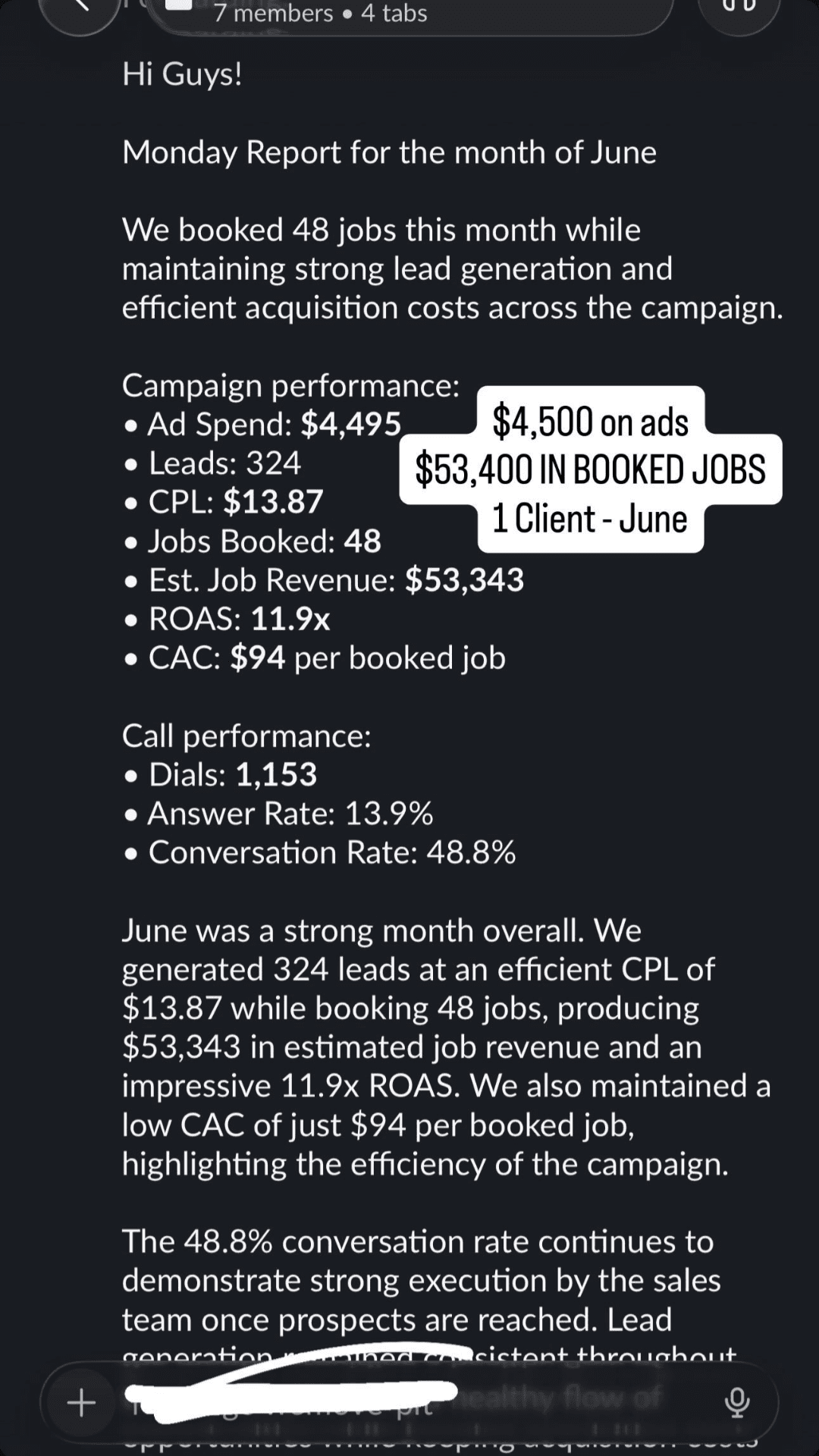
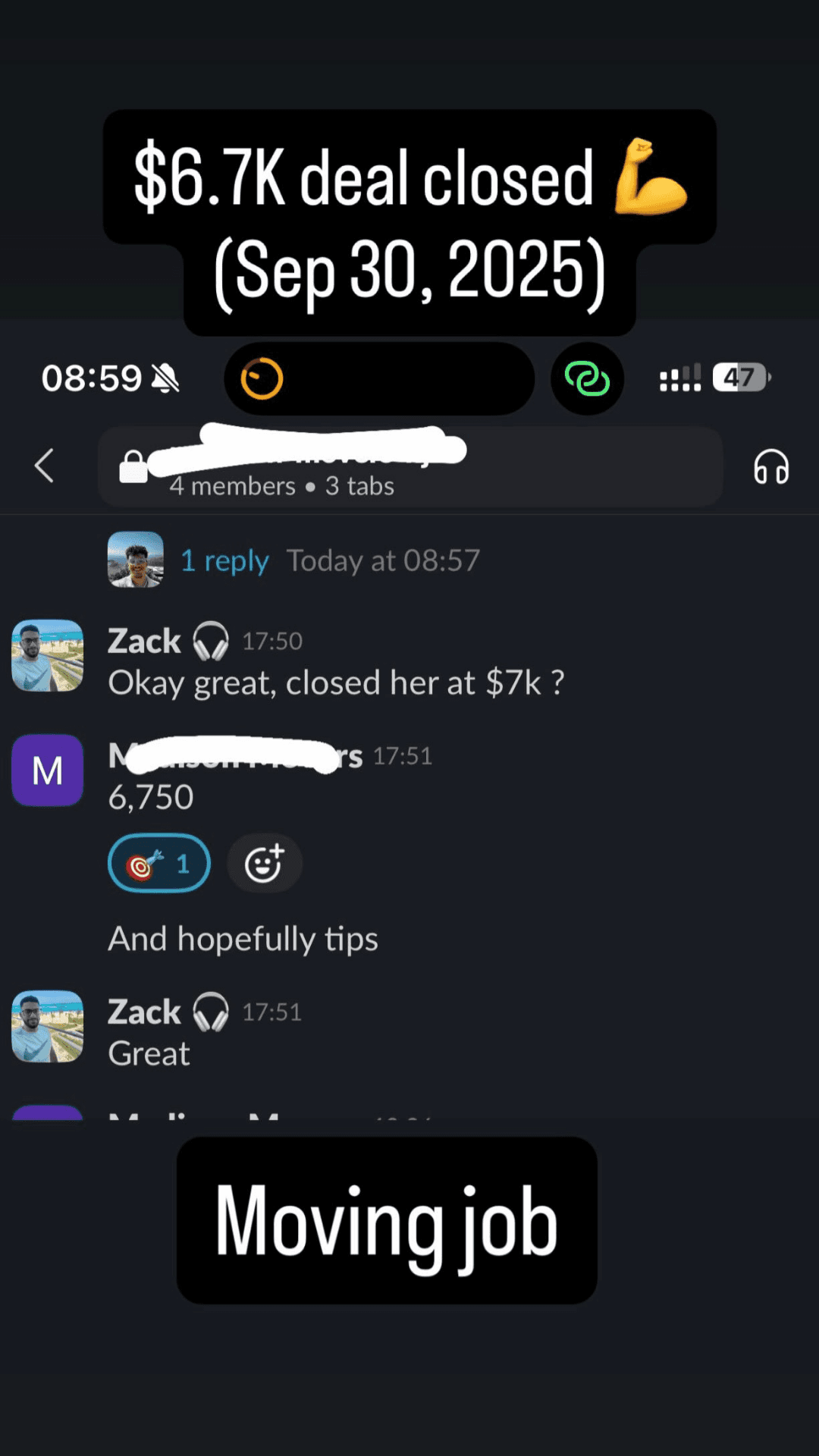
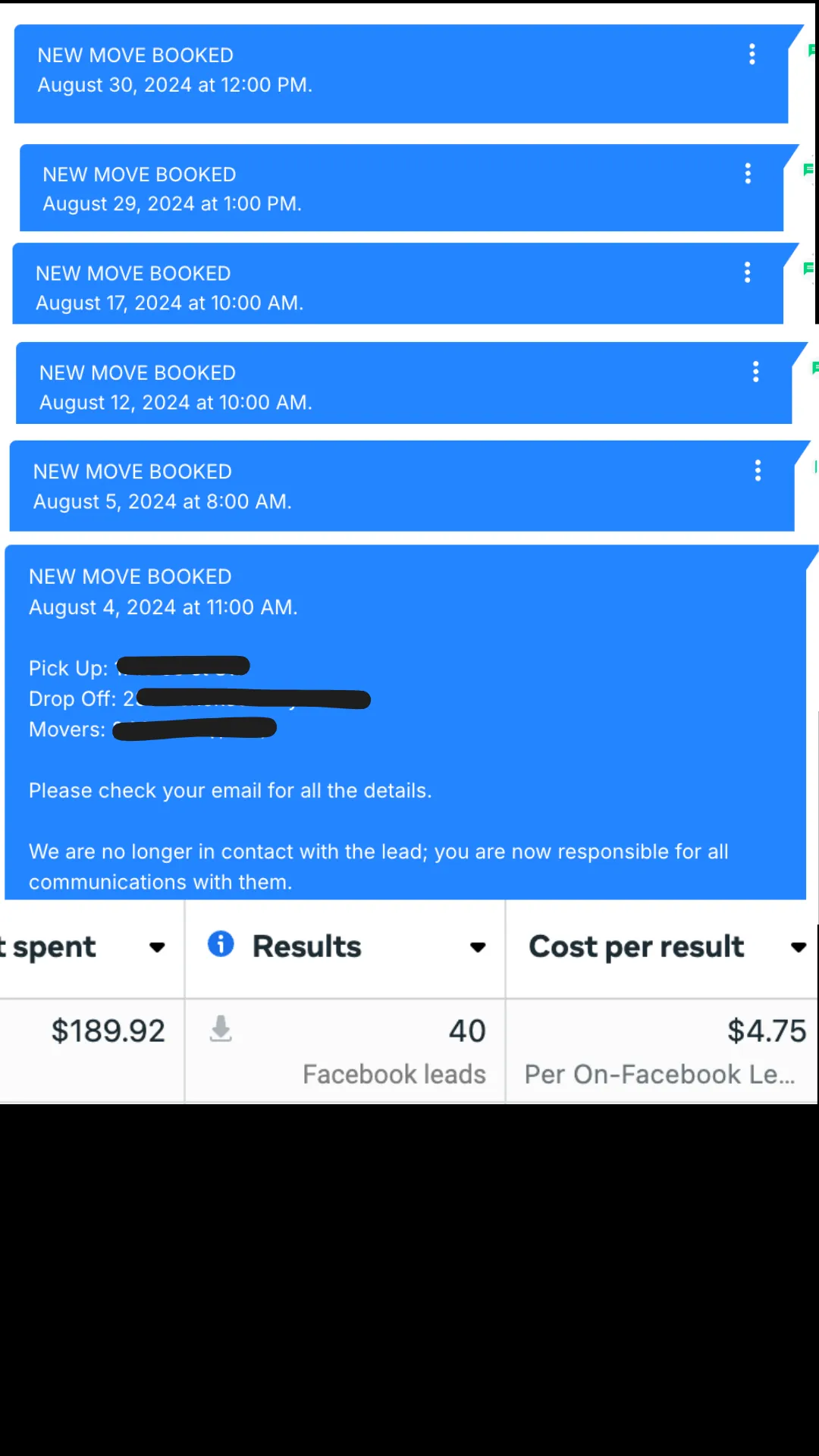
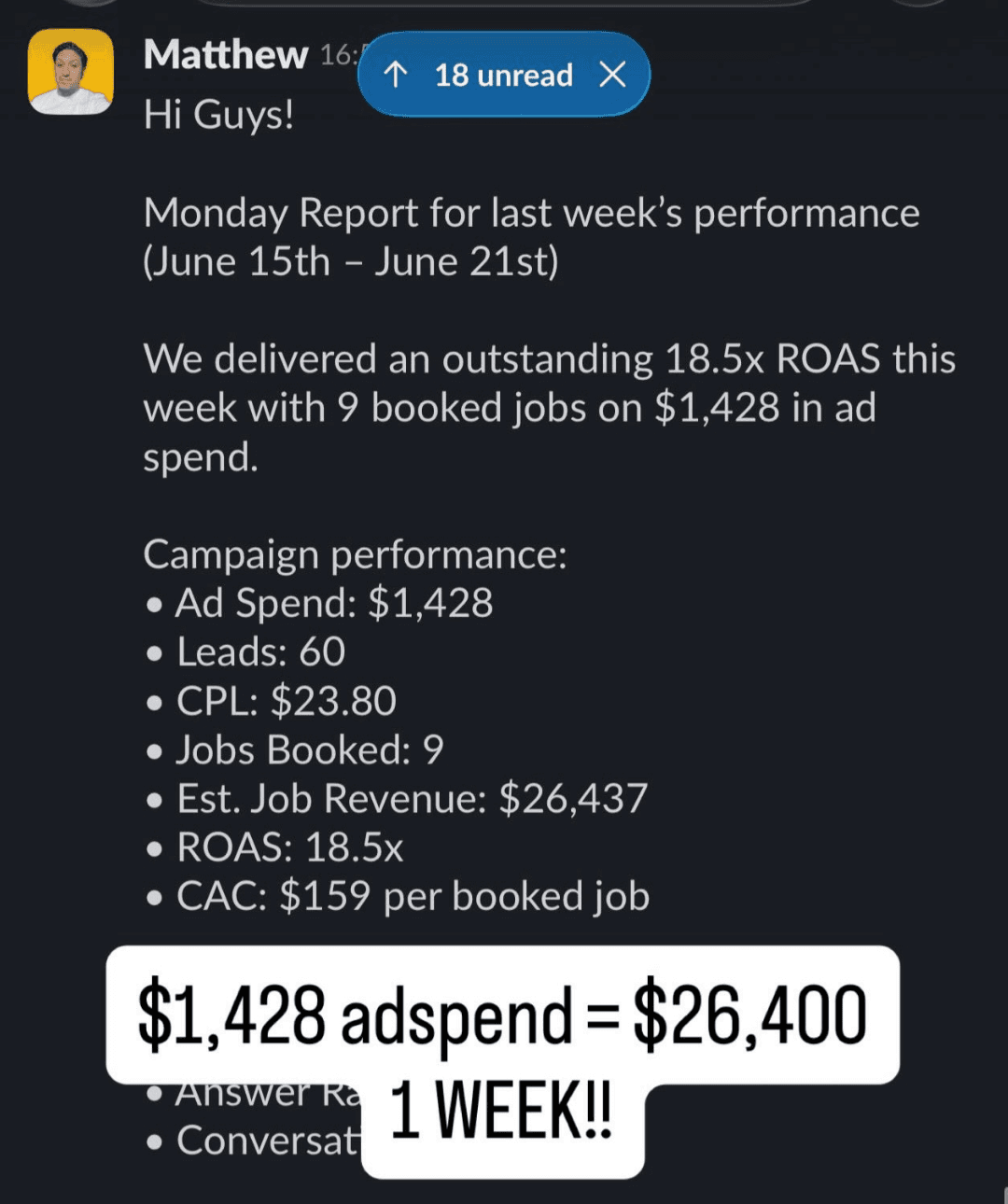
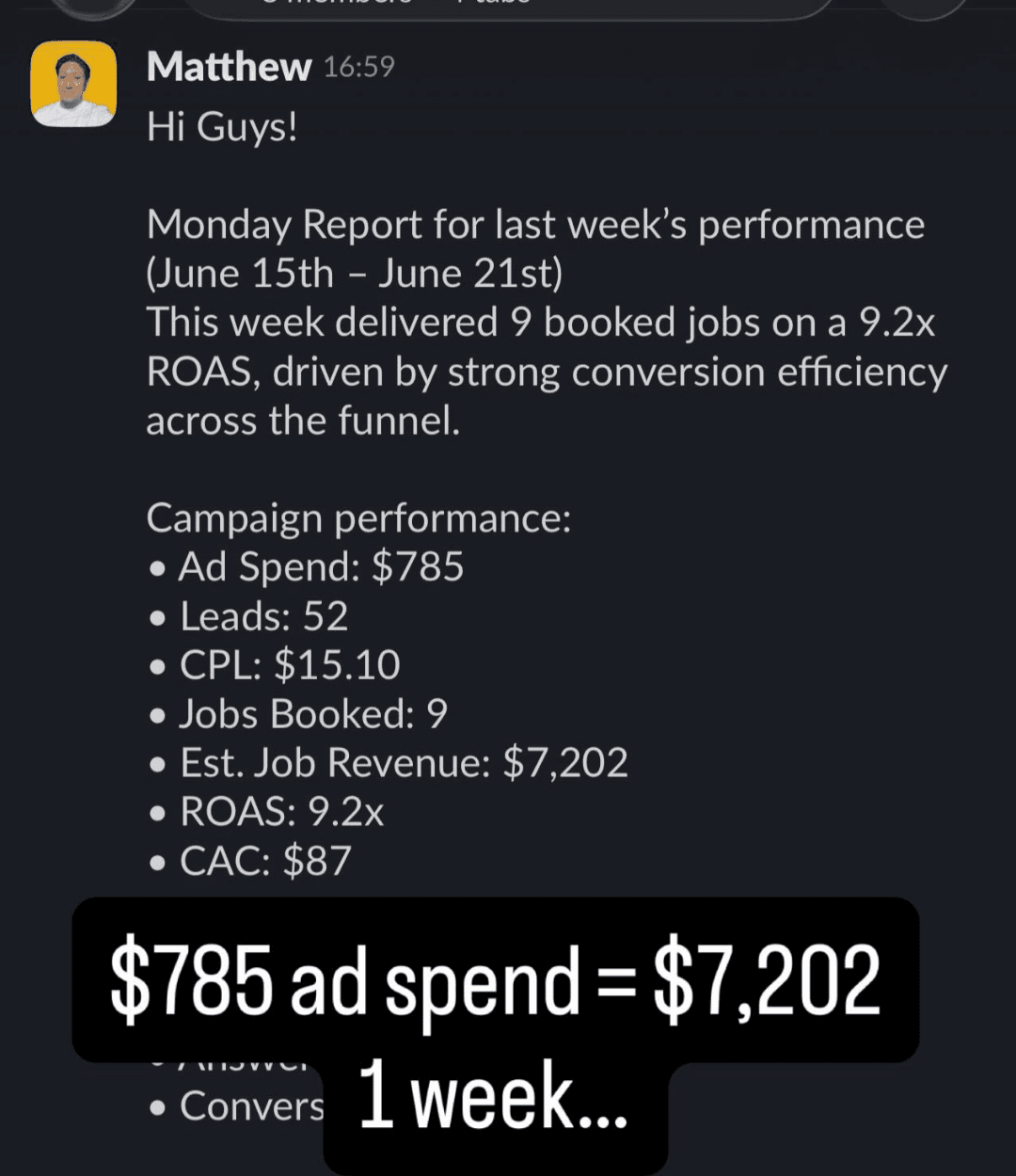
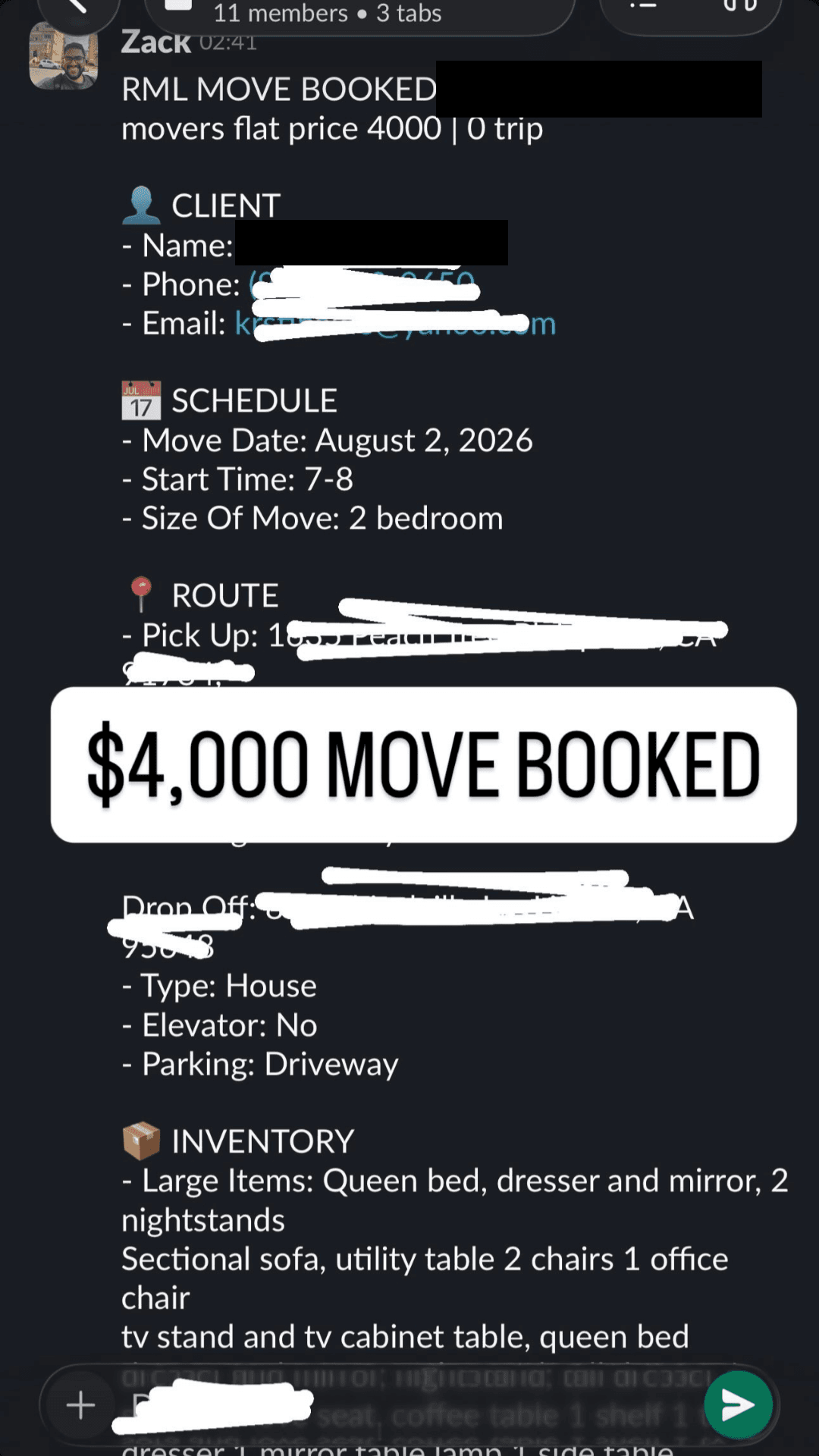
Here is one month from an account we manage, so you can see how the numbers relate: $4,495 in ad spend produced 324 leads at $13.87 each. Those became 48 booked jobs and $53,343 in job revenue — which works out at $94 per booked job.
The $13.87 is the number most agencies would report. The $94 is the number that tells you whether it's working. Judge every channel that way, including the free ones, and it becomes obvious very quickly where your next dollar should go.
Start before your busy season
Ads take weeks to settle. The first month is the platform learning your market and your customer; it gets meaningfully better once real booking data is feeding back into it.
Which means starting in May, when everyone else is bidding too, has you paying peak prices while the system is still learning. Starting in the quiet months costs less and has you dialled in before the phone should be ringing anyway.
Anyone promising you results in thirty days is either guessing or handing you leads somebody else already called.
What to track
Most moving companies track spend and leads, and nothing after that. You want the whole line, per channel:
- Ad spend
- Leads, and cost per lead
- How many were actually reached, and how fast
- Quotes given
- Booked jobs, and cost per booked job
- Deposits collected and job revenue
If you can see that line, you can tell which channel deserves more money and which one you have been quietly subsidising for a year. If you can't, you are guessing — and so is whoever runs your ads.
This is the whole of what we do
We run the ads and our own trained reps call every lead, quote the move, chase the follow-up and collect the deposit — under your company name. You get booked jobs on your calendar rather than a list of names to chase. See how it works, or check whether your market is still open.